Raharitiana’s Hope: Fighting Child Malnutrition in Madagascar
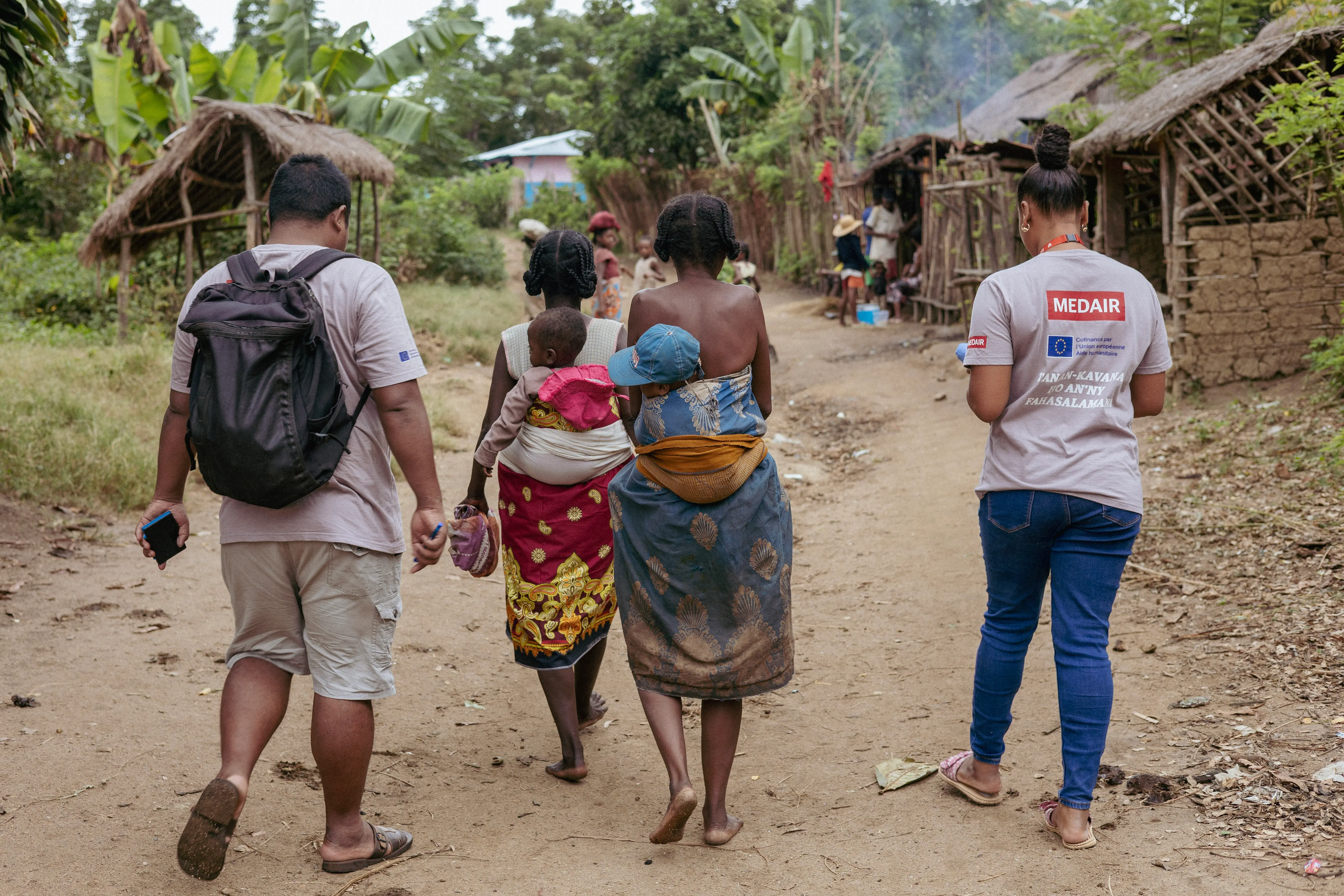
The moment we leave the health centre in Mahatsinjo, a crowd gathers around us. At first, it is just a few children curious about the visitors. Then ten. Then twenty. By the time we reach the edge of the village, we are surrounded: at least sixty children walking alongside us along the main path between the houses. They do not just follow us. They sing and dance with us all the way.
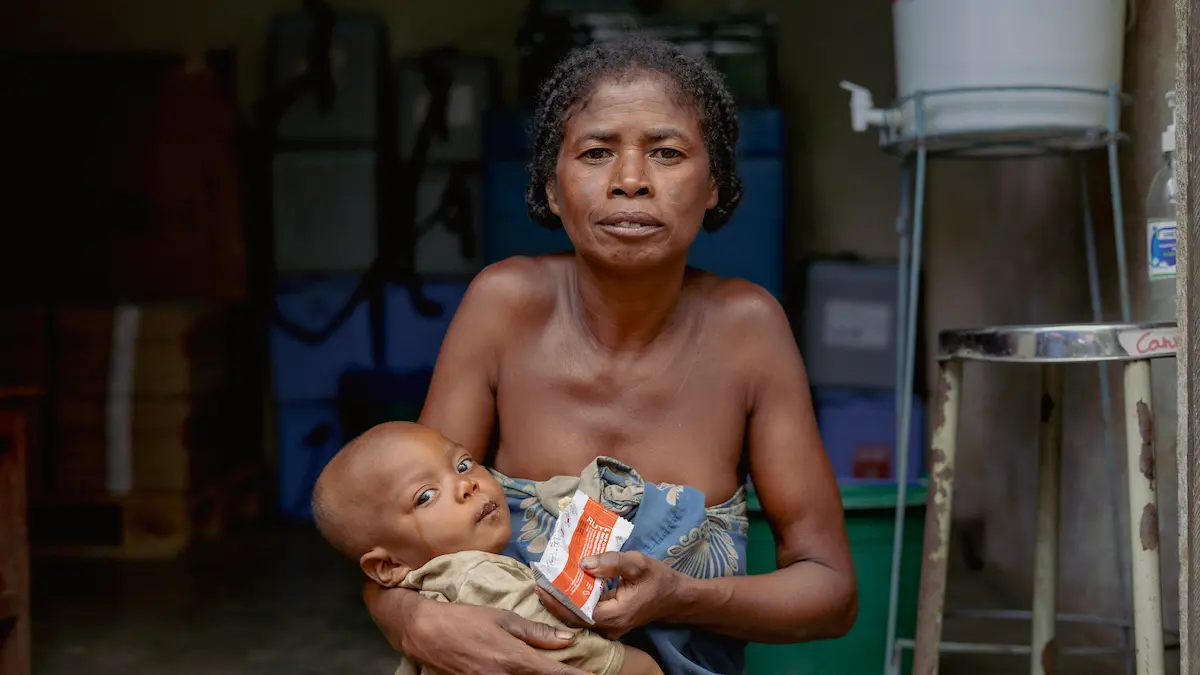
We are with Raharitiana, a grandmother in her thirties, as she goes about her day with her grandson: attending his medical appointment, collecting medication and walking home with us through the village. She makes this journey about every two weeks, returning regularly to ensure he receives the care he needs.
Her grandson, Ilarida, is one year old. He is small for his age, fragile and recovering from malnutrition.
A long journey that begins at the clinic
At the Mahatsinjo Basic Health Centre, mothers sit with children on their laps, waiting quietly for their turn. The doctor calls names, measures weight, checks symptoms and prepares treatment plans.
“I bring him here often,” Raharitiana tells us. “He has been struggling with a very bad cough and difficulty breathing.”
Ilarida’s mother became pregnant again before he turned one and was unable to continue breastfeeding. Without adequate nutrition, his health deteriorated quickly.
When the doctor assessed him, he was enrolled in a nutrition programme. He receives treatment and is given weekly supplies of Plumpy’Nut, a therapeutic food used to treat acute malnutrition.

Walking through the village
After the appointment, we follow Raharitiana as she collects the medication and begins the walk home, with Ilarida on her back. The path winds through the village: dusty, uneven and alive with children who continue to follow us, laughing, watching and curious.
This is not an unusual sight here. Outsiders are rare, and the presence of Medair staff often becomes a small event in itself.
A home marked by need, hope and resilience
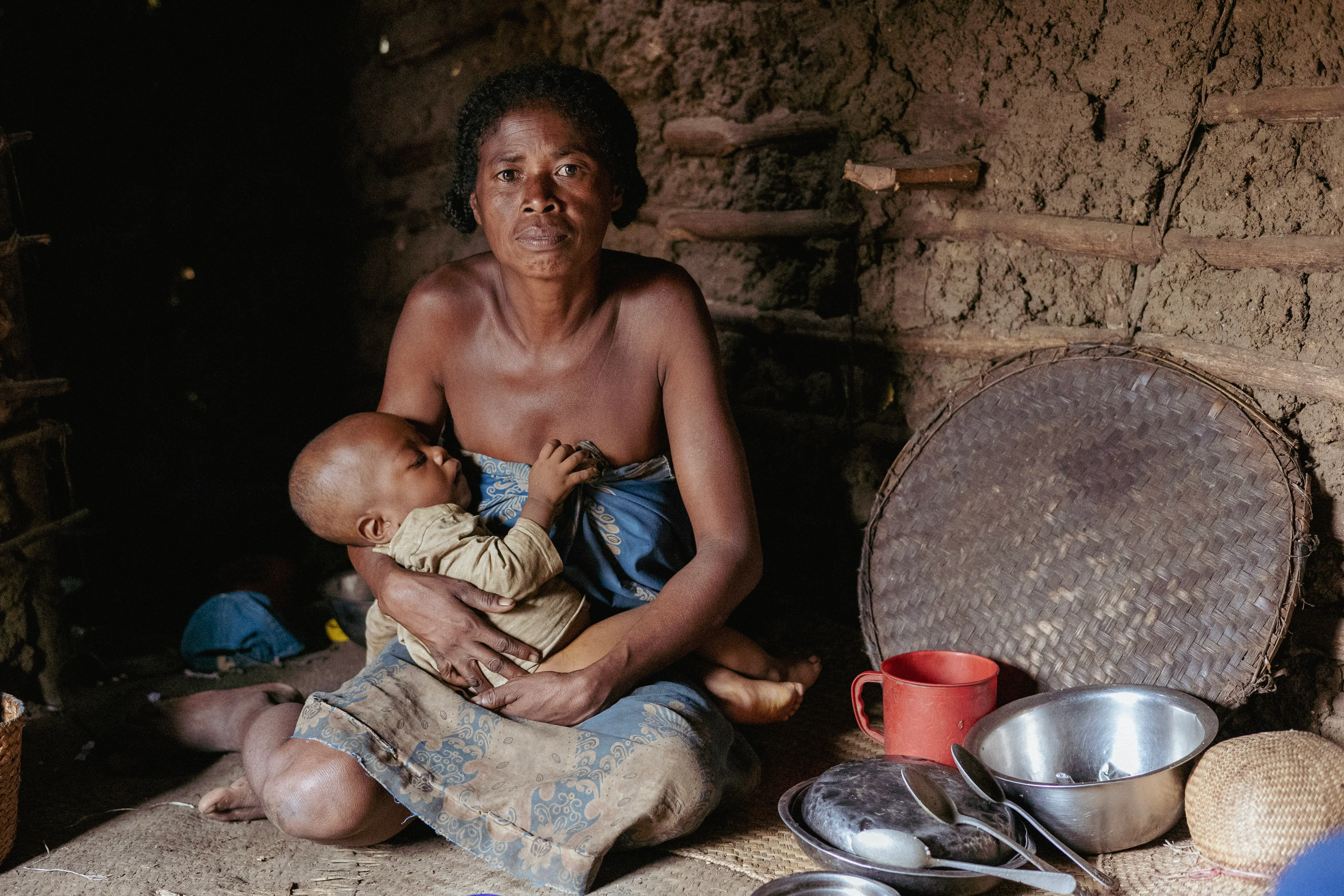
Her house is small, built from a mixture of mud, leaves and wood. Inside, there is no furniture, and the earth floor smells of fresh rain. We hear mice moving across the ceiling. It is a stark reminder of the conditions in which this child is recovering.
“He was so thin when we first came,” she says. “His face was very pale. Now I can see the difference. He is gaining weight. His colour is better. He is becoming stronger every day.”
“I took him from his mother’s house,” Raharitiana explains quietly. “It has not been easy, but now there is some hope. I thank God for giving me the strength to care for him.”
The health centre behind the story
For Diana, a Medair nurse working at the clinic, cases like Ilarida’s reflect wider seasonal and structural challenges.
“The most common illness here among children under five is malaria,” she explains. “But malnutrition is also very common.”
The cause is closely linked to the agricultural cycle. Rice, the main staple, is harvested only twice a year, in May and November.
“In the months before the harvest, there is often not enough food,” she says. “Families eat what they can find, or sometimes nothing at all.”
During these periods, malnutrition rises sharply.
Finding children before it is too late
At the health centre, early detection is key.
“We carry out regular screening and monitoring,” Diana explains. “We also work with community health workers to identify children before it is too late.”
Once a child is diagnosed, treatment begins immediately: nutritional assessment, medication such as amoxicillin, vitamin A, deworming tablets and therapeutic food such as Plumpy’Nut.
A fragile but real recovery
In Mahatsinjo, recovery does not happen in isolation. It happens through regular follow-up visits, long walks, careful monitoring and the quiet persistence of caregivers like Raharitiana.
As we leave the village, the children wave goodbye. Behind us, life continues: fragile, difficult, but not without care.
And in Raharitiana’s home, a small boy is growing stronger.
“Now,” she says, “there is some hope.”
Medair services in Mahatsinjo, Madagascar, are funded by ECHO and private donors.
This content was produced with resources gathered by Medair field and headquarters staff. The views expressed herein are those solely of Medair and should not be taken, in any way, to reflect the official opinion of any other organisation.
.png)
.png)
.webp)