Ebola: understanding what happens during an outbreak
What is the situation on the ground?
The situation remains extremely concerning. Healthcare teams are working in an environment marked by urgency, exhausted medical facilities, and deep community anxiety. In affected areas, health centres must ensure continuity of care whilst maintaining very strict preventive measures.
Beyond the health impact, Ebola profoundly disrupts daily life: some families are separated, movement is restricted, and many people are afraid to go to health centres for fear of infection or stigmatisation.
Our teams, in collaboration with the authorities and local partners, continue to support health facilities, raise awareness within communities and strengthen capacity to manage Ebola and other diseases as they arise.
What are the symptoms of Ebola?
Early symptoms can resemble those of other common diseases in the region, which can make diagnosis difficult at first. People with the disease often experience:
- A high fever
- Severe fatigue
- Muscle aches and headaches
- Vomiting or diarrhoea
- Bleeding (sometimes)
The disease can progress rapidly and become very serious if not managed quickly.
This is why it’s essential to identify suspected cases as early as possible, so as to isolate patients, provide them with appropriate care and protect their loved ones.
What care can be provided?
Rapid medical care significantly improves the chances of survival.
Care includes:
- Intensive hydration
- Treatment for pain and fever
- Nutritional support
- Constant monitoring of vital signs
- Prevention and treatment of complications
Patients also receive significant human and psychological support, as isolation and the severity of the disease can pose a particularly difficult challenge to overcome.
How is the emergency response to Ebola organised?
The response is based on several complementary approaches, such as:
- Rapid detection of suspected cases
- Isolation and care of patients
- Monitoring people who have been in contact with patients
- Awareness-raising and community engagement activities
- Strengthening hygiene measures, which form the basis of infection prevention and control within the community (improving behaviours among communities at household level, promoting handwashing in schools and at markets)
Medical teams, authorities, and humanitarian organisations such as Medair, alongside community leaders, are working together to limit the spread of the virus.
Community trust plays a vital role in the effectiveness of Medair's work.
This trust is strengthened at various levels:
- At community level: through awareness-raising, dialogue and engagement with communities to promote prevention, early detection and access to care.
- In health facilities: by supporting health services, building the capacity of healthcare staff, and improving the quality of care and infection prevention and control measures.
- In treatment centres: by ensuring safe, dignified and high-quality care, as well as by walking alongside patients and their families throughout their care journey.
What precautions are taken to prevent transmission?
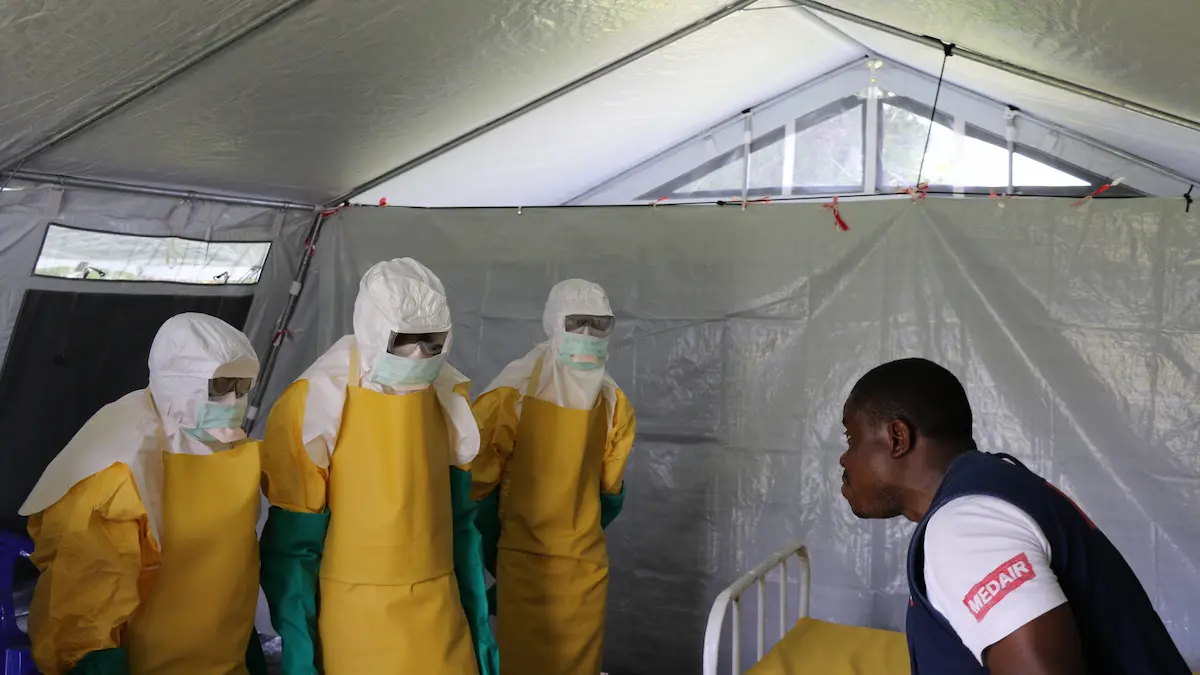
Prevention is at the heart of the response to Ebola. Teams follow strict personal protective equipment protocols: coveralls, gloves, masks, rubber boots, goggles and disinfection procedures. In treatment centres, pathways are organised to separate suspected patients, confirmed patients and secure areas for staff. Handwashing stations and enhanced hygiene measures are also in place in healthcare facilities.
What’s lacking on the ground?
Needs remain significant. Healthcare facilities often lack trained staff, medical supplies, protective equipment, and sufficient triage and isolation capacity. Access to certain areas can also be complicated by the state of the roads, insecurity or geographical remoteness. Beyond material needs, it’s also essential to have the time and resources to maintain dialogue with communities, address their concerns and combat rumours.
What’s the mood within the communities?
Communities are experiencing great anxiety and uncertainty. Fear of the disease, rumours and past experiences can sometimes create misunderstanding. Some people hesitate to visit health centres or fear being separated from their loved ones. As response organisations, it’s our responsibility to collaborate effectively with communities to overcome these challenges.
That said, in many places, we also see a strong desire to protect families and to work with health teams. Community engagement and dialogue are essential. Our teams take the time to listen to concerns, explain the measures put in place and work with community leaders to build trust and face this outbreak together.
Could you provide a more detailed account of how a patient is managed?
When a patient arrives with symptoms suggestive of Ebola, they are first welcomed in a secure triage area. The medical team quickly assesses their clinical condition whilst applying strict infection control measures.
If the case is considered suspect, the patient is referred to an isolation unit where further tests, including a blood test, are carried out. As the first few hours are often crucial, the medical team immediately begins rehydration and closely monitors the patient's temperature, breathing and any signs of complications. If the test is positive, the patient is transferred by a specialised Ebola ambulance to a dedicated treatment or transit centre, where they will receive appropriate care, and contact tracing is immediately initiated. If the result is negative, the patient may be referred to a healthcare facility to receive appropriate treatment for their other symptoms.
Beyond medical care, human support is vital. Patients are often isolated from their loved ones and experience moments of great fear. Healthcare workers therefore also strive to maintain a human connection, despite protective equipment and health restrictions.
When a patient recovers and can return home, it represents a deeply moving moment for both the teams and the community. These recoveries also help to restore hope and strengthen confidence in the care provided.
This content was produced with resources gathered by Medair field and headquarters staff. The views expressed herein are those solely of Medair and should not be taken, in any way, to reflect the official opinion of any other organisation.
.webp)
%20(1).webp)