Protecting Families: Hygiene Kits Help Fight Cholera in Khartoum
A Daily Fight for Survival
When the escalating conflict in Khartoum forced Samira* and her seven children from their home, they spent days sleeping in the streets with no shelter, no food, and no safe water. Earlier this year, when fighting subsided in Khartoum, they managed to return to live with relatives. But conditions remained dire: food was scarce, markets were closed, and families were left vulnerable to disease.
“I had no place to stay with my children and no money to return home,” she recalled. “Feeding my family is the biggest challenge.”
Living in Constant Fear
Samira*’s struggle is far from unique. Across Sudan, millions of families face the same daily fears. The collapse of markets means food is unaffordable, and widespread poverty leaves parents with few options. 24.6 million people, almost half the population of Sudan, are experiencing acute food insecurity. Families are crammed into gathering sites or staying with relatives in already overstretched households. Hygiene is difficult to maintain, and safe water is a luxury many cannot access.
Samira* remembers the hardest moment of her displacement: “At the beginning of the conflict, I was with my children in Al Jazirah State. We spent nights on the street. I feared for my children’s lives.”
A Country Gripped by Cholera
Sudan is facing the largest internal displacement crisis anywhere in the world, with more than 10 million people forced from their homes. Families are sheltering in overcrowded and unsanitary conditions, where clean water and sanitation are nearly impossible to access.
This environment has fueled a severe cholera outbreak, with nearly 100,000 suspected cases already reported. Cholera is an acute diarrhoeal illness caused by infection of the intestine. It spreads rapidly in places where families must rely on unsafe water or where open defecation contaminates rivers and surface water. For children, the disease can be fatal within hours if untreated.
In Khartoum State, families are particularly vulnerable. Conflict has damaged water systems, forcing households to fetch untreated water from the Nile. Seasonal flooding has contaminated surface water in many parts of the country, making cholera spread even faster.
Samira* worried constantly about the risk of her children falling sick. “The conflict complicated our life by closing markets and health facilities,” she explained. “I do my best to care for my children and keep them safe.” Already weakened by hunger and poverty, her family faced enormous risks of disease.
Medair’s Response
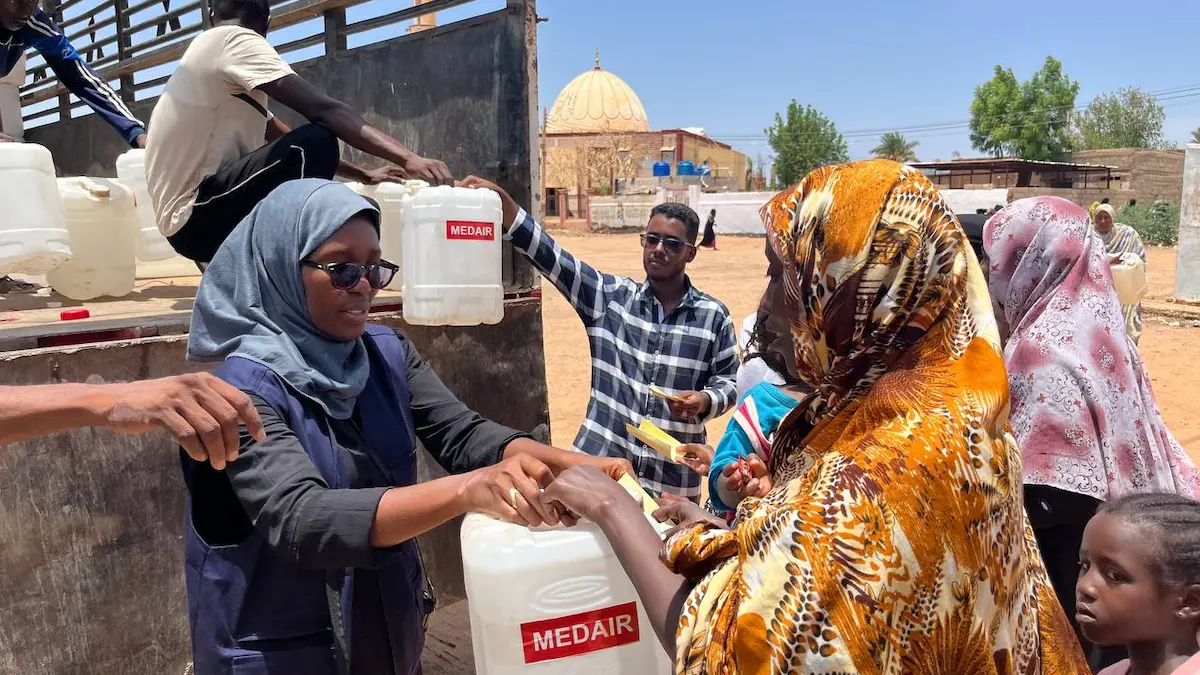
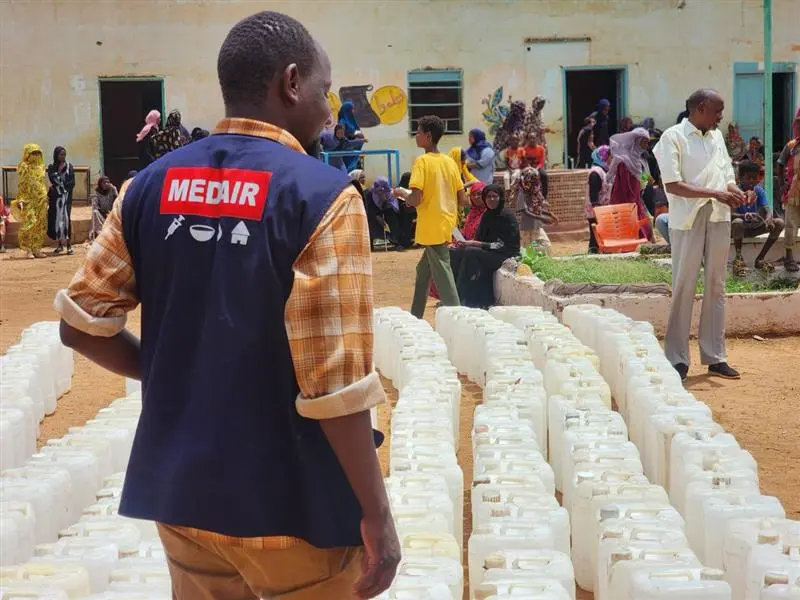
To prevent the spread of cholera, Medair distributed hygiene kits, including jerrycans, water purification tablets, and soap, to 11,900 displaced people like Samira* in Khartoum State. These kits allow families to store water safely, purify it before drinking, and practice proper handwashing.
Families also received health and hygiene messages to help them understand how cholera spreads and how to prevent it. Simple guidance like boiling water, washing hands, and proper waste disposal can save lives when cholera threatens to spread.
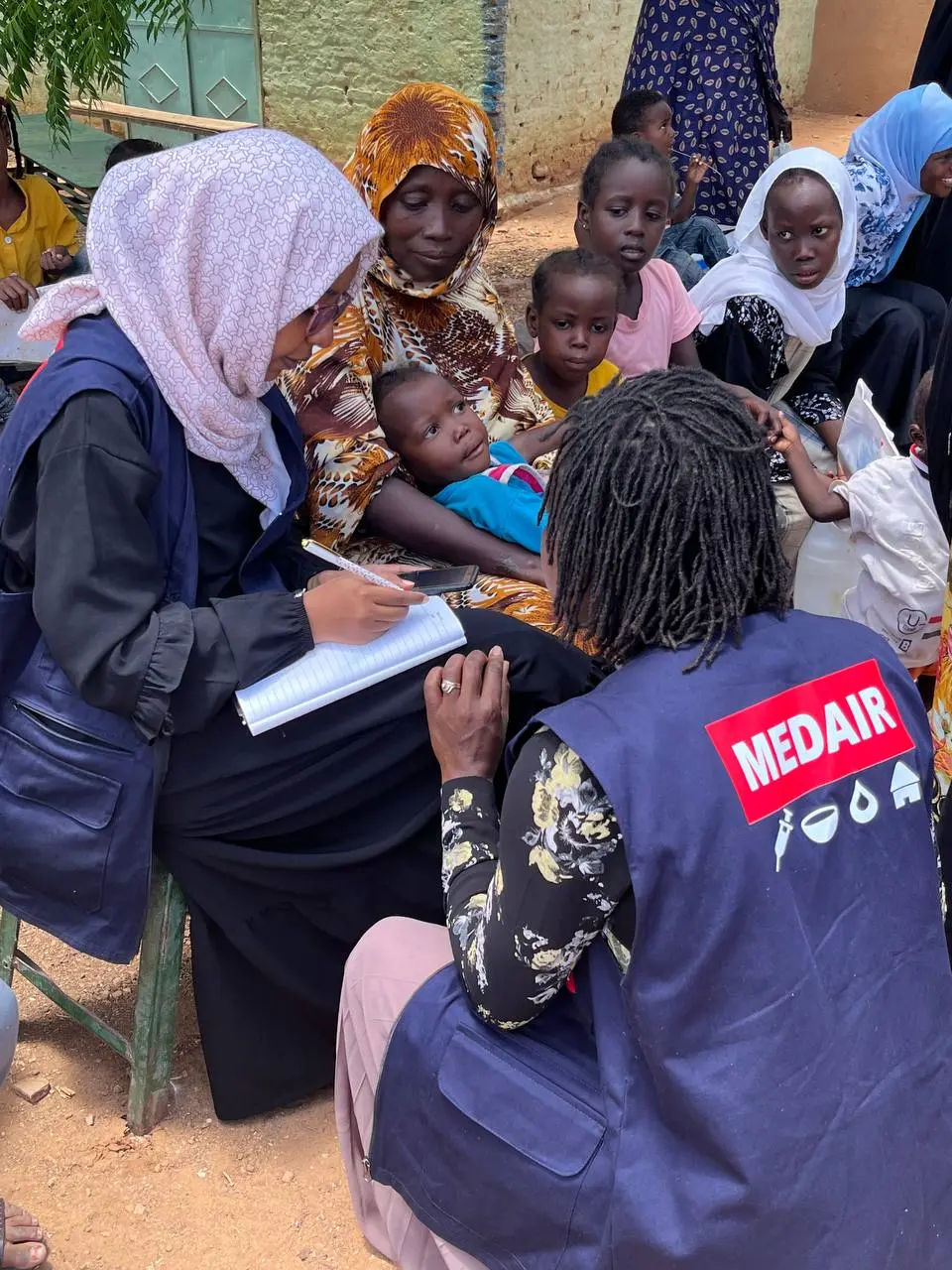
“We used to fetch water only from the river,” Samira* said. “Now we have jerrycans and soap and I can keep my children clean. The acquatabs will help me to purify drinking water this rainy season.”
A Medair staff member who supported the distributions shared: “The satisfaction and the relief I saw on her face was beyond description.”
The Human Impact
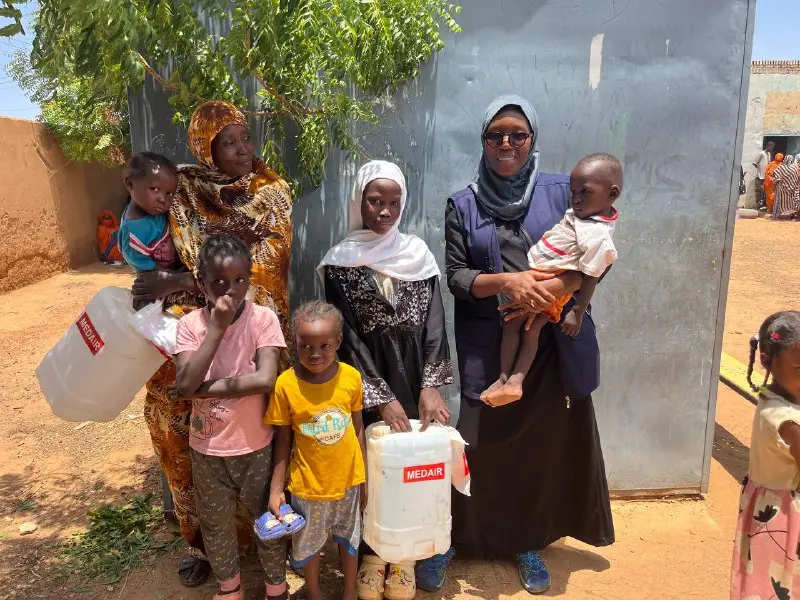
For Samira*, the intervention gave her more than physical items. It provided peace of mind during an outbreak. “I felt relief,” she said. “Medair was honest with us. They came to register us, and in two days, we received the distribution. This is my first time being treated like this.”
For a mother of seven who had endured displacement, hunger, and the constant threat of conflict and disease, this support was life-changing. It gave her children a chance to drink clean water and reduced the likelihood of cholera reaching her home.
Hope for Tomorrow
Thanks to donor support, Medair is protecting families in Sudan from cholera and giving them tools to survive this crisis with dignity. Without hygiene kits and awareness, families like Samira*’s would be left less resilient against disease.
But the needs remain immense. Millions more families face the same risks. The cholera outbreak continues to spread in overcrowded gathering sites, where one case can quickly turn into dozens. With sustained support, Medair can reach more people, scale up the response, and strengthen health systems.
Help protect families from cholera. Give hygiene kits. Save lives.
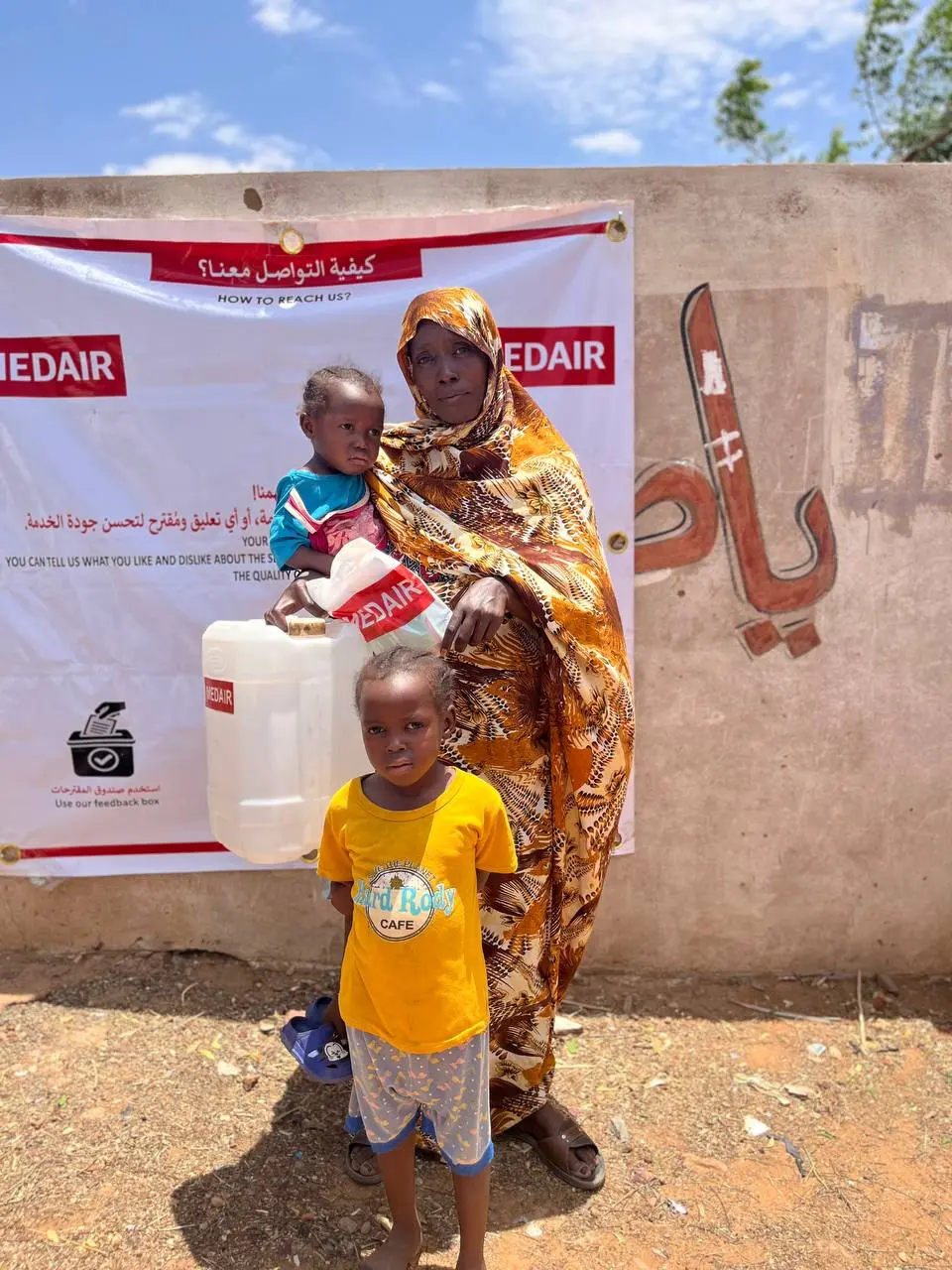
*Name has been changed for security reasons.
This content was produced with resources gathered by Medair field and headquarters staff. The views expressed herein are those solely of Medair and should not be taken, in any way, to reflect the official opinion of any other organisation.
.png)
.png)
.webp)